

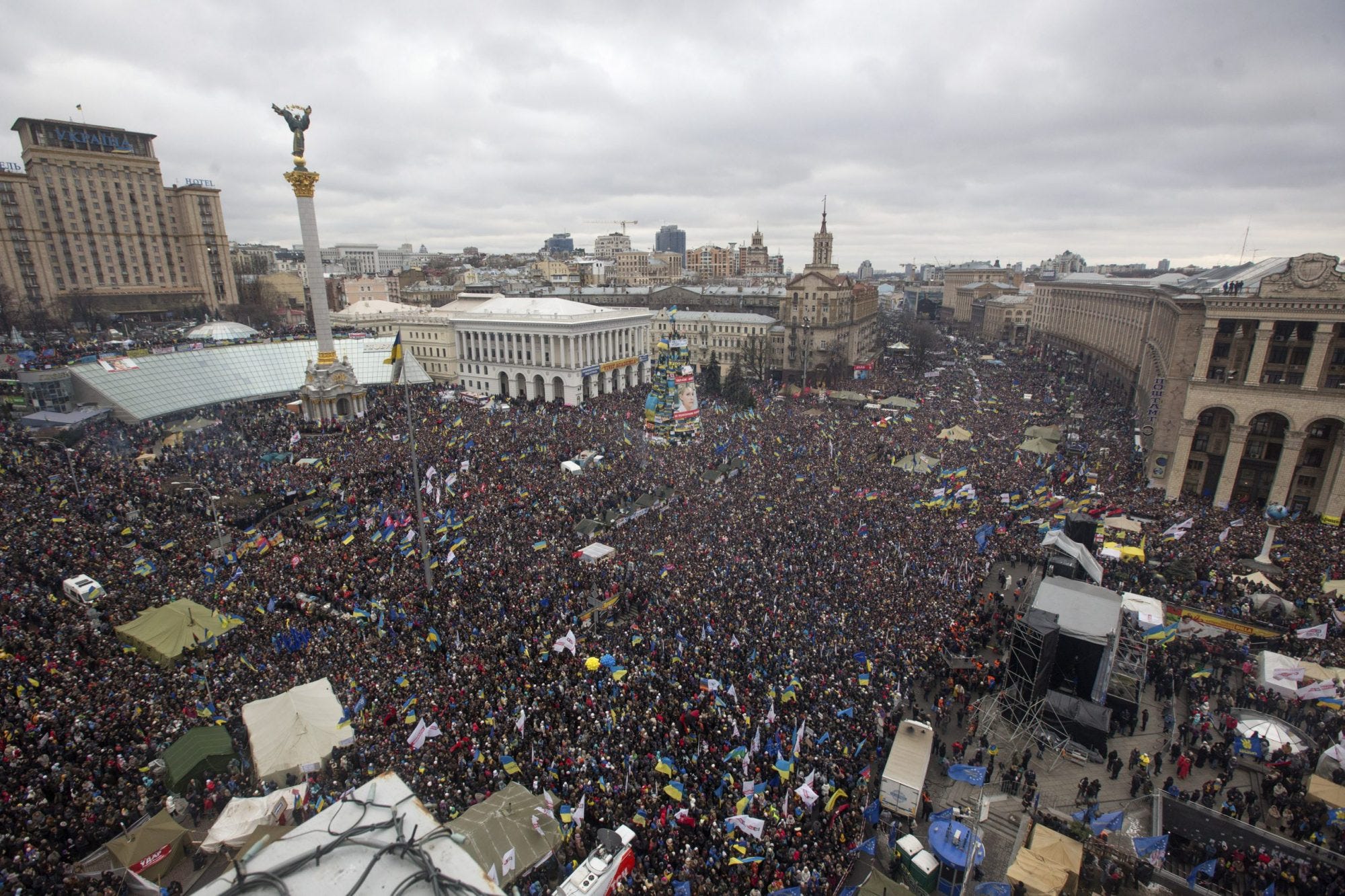
Since the collapse of the Soviet Union in 1991, Ukraine has struggled to find its place in the world and solidify its identity. They first had to contend with the external perceptions and internal tensions of being labelled a semi-autonomous satellite state of Russia. In the span of ten years, they experienced two revolutions: The Orange Revolution in 2004 and the Revolution of Dignity in 2014. Both grew out of a desire to break free of Russia’s sphere of influence, assert their independence, secure their sovereignty, and chart a course of prosperity through greater integration with the West.
Ukraine’s Orange Revolution of 2004 was the first major break towards European integration nearly 15 years after independence. Despite the efforts of the pro-Kremlin candidate Viktor Yanukovych to steal an election and the poisoning of his rival Viktor Yushenko, the Ukrainian population protested in the hundreds of thousands to force a new election which ultimately delivered a victory to a pro-Western administration. In the end, it was a short-lived victory for those who desired closer ties with the EU.
In 2010, Viktor Yanukovych ran again with future-Trump advisor Paul Manafort leading his campaign. Manafort orchestrated a rebrand painting Yanukovych as a reformer who would strike a balance between pro-Western and friendly Russia relations which resulted in him winning a free and fair election to become Ukraine’s fourth president. Once in office, Yanukovych showed himself to be incredibly corrupt and rather than balancing between the EU and Russia, he was unabashedly pro-Kremlin. He leveraged corruption and patronage networks to enrich himself and consolidate power at the expense of nascent democratic institutions. He was then able to apply enormous pressure on independent media, target his opposition with harassment and criminal legal action, steal with abandon, hollow out the military, and extend Russia’s lease for their Black Sea fleet base for decades. Russia later used this base as a staging ground for their 2014 attack on the Crimean Peninsula.

In early November 2013 our family spent a weekend in Ukraine and it was notable to me that pensioners who historically fell back on Soviet nostalgia were holding European Union signs. It was clear that swaths of the population had no interest in being subordinated and suborned to Russia. Amid this growing pro-Western sentiment, it was discovered that Yanukovych had been bought off with a $10 billion bribe. Protests immediately started in Kyiv. They steadily built from thousands to tens of thousands and eventually hundreds of thousands of Ukrainians gathered in Freedom Square in response to Yanukovych’s efforts to violently repress the protests in what would come to be known as The Revolution of Dignity. That all started 10 years ago this week.
After six months of peaceful protests amidst tyrannical crackdowns and attacks on the protesters, Ukrainians realized victory when Yanukovych was forced to relinquish the presidency and flee to Russia. His former home outside Kyiv is now a museum of corruption.
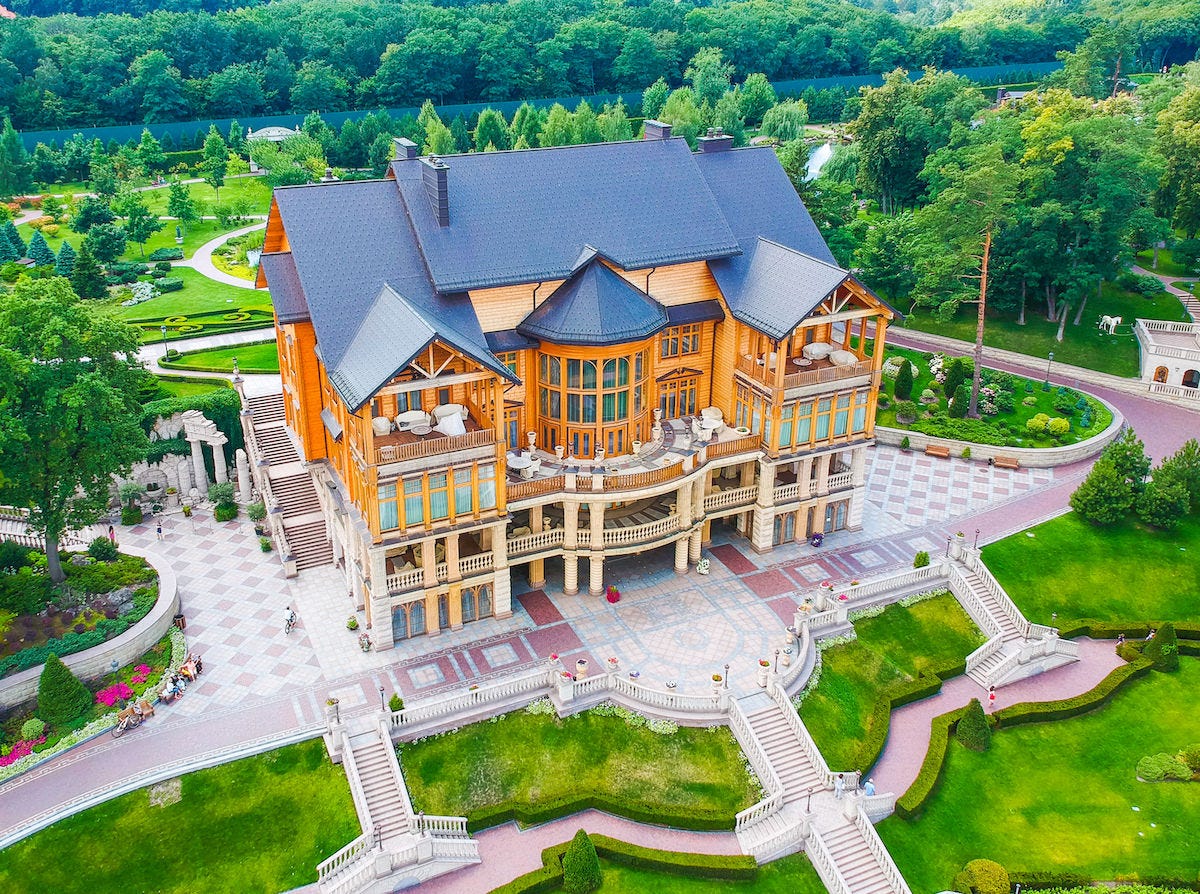
Why it Matters: Today’s Russia-Ukraine War effectively started ten years ago when Ukraine spiraled into chaos caused by corruption so rampant the government was barely functioning. That chaos created opportunities for Russia to seize Crimea and other Ukrainian territory. Russia relearned the lesson that in chaos, there is opportunity to for predatory aggression. Russia too often seizes on opportunities that arise when it perceives weaknesses.
Closer to home, we can also learn from Ukraine’s resistance both in the 2004 Orange Revolution and the 2014 Revolution of Dignity. In spite of nearly insurmountable odds, when people unite with a common resolve they can resist tyranny at home and fend off predators from abroad.
Thank you for such a clear description of the aspirations of Ukrainian people and how bribes, corruption, and greed damage the goals of democracy.
This is the type of international history that American high school students should be learning about from their freshman year onwards.